YouTube has become one of the most popular platforms for sharing videos, building an audience, promoting businesses, and creating online opportunities. From educational tutorials and entertainment videos to product reviews, business promotions, and personal branding, YouTube offers opportunities for individuals and businesses across different industries.
However, creating videos and uploading them regularly is not enough to grow a successful YouTube channel. You need to understand content planning, video SEO, audience retention, thumbnails, analytics, and monetization strategies.
This is why learning YouTube marketing can be a valuable digital skill.
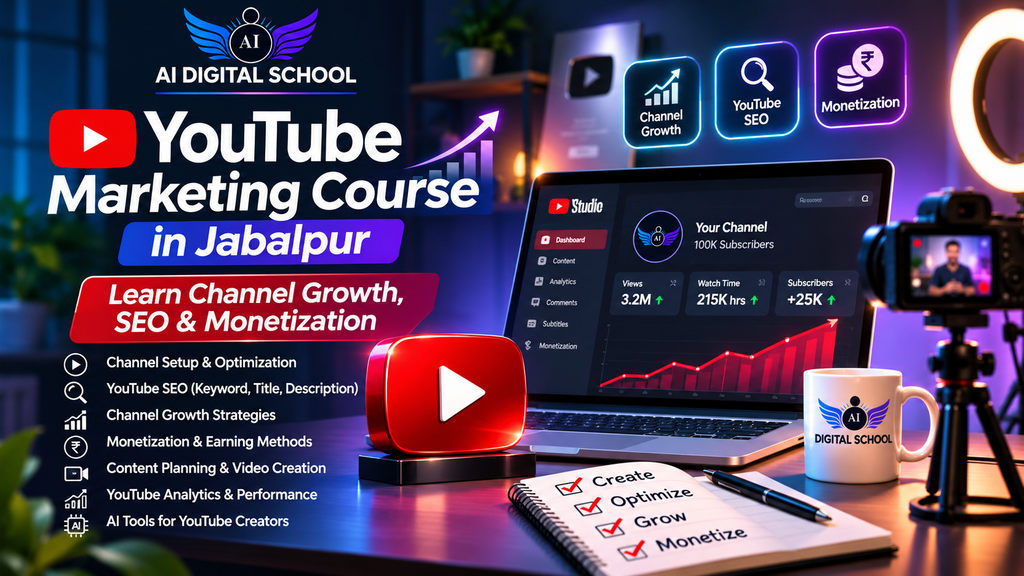
A YouTube Marketing Course in Jabalpur can help beginners understand how YouTube works, how to optimize videos for search, develop a content strategy, grow a channel, and explore different monetization opportunities.
Whether you are a student, freelancer, business owner, content creator, or aspiring YouTuber, this guide will help you understand YouTube marketing from the basics to advanced concepts.
What Is YouTube Marketing?
YouTube marketing is the process of using YouTube to promote a brand, product, service, business, or personal identity through video content.
It involves creating valuable videos, optimizing them for discovery, engaging with viewers, analysing performance, and developing strategies to achieve marketing goals.
Businesses and creators use YouTube for different purposes, including:
- Building brand awareness
- Promoting products and services
- Educating potential customers
- Generating business enquiries
- Developing a personal brand
- Growing an online community
- Driving website traffic
- Generating revenue through eligible monetization methods
YouTube marketing combines content creation, search engine optimization, video storytelling, audience research, and performance analysis.
Why Is YouTube Important for Digital Marketing?
Video content allows businesses and creators to communicate information in an engaging and visual format.
YouTube provides opportunities to reach audiences through search results, recommendations, Shorts, subscriptions, and other discovery features.
Here are some important benefits of YouTube marketing.
1. Build Brand Awareness
Businesses can introduce their products, services, and expertise through educational videos, demonstrations, and promotional content.
2. Develop a Personal Brand
Creators and professionals can share their knowledge, experiences, opinions, and skills to establish a recognizable identity.
3. Reach a Wider Audience
YouTube allows creators to publish content that can be discovered by viewers beyond their immediate location.
4. Generate Business Leads
Businesses can use video content to explain their services, answer customer questions, and encourage viewers to visit their websites or contact them.
5. Build Audience Trust
Tutorials, demonstrations, customer stories, and informative videos can help audiences understand a business and its offerings.
6. Explore Monetization Opportunities
Eligible creators may earn revenue through YouTube’s monetization features, depending on programme requirements and channel eligibility.
Why Learn YouTube Marketing in Jabalpur?
YouTube is useful for businesses, educational institutes, professionals, and content creators in Jabalpur.
Local businesses can use videos to showcase their products, explain services, share customer experiences, and connect with potential customers.
Learning YouTube marketing in Jabalpur can help you develop skills that are useful for creating content for local audiences as well as viewers across India.
Some reasons to learn YouTube marketing include:
- Understand how YouTube channels work.
- Learn video content planning.
- Develop YouTube SEO skills.
- Create attractive video thumbnails.
- Understand YouTube Shorts.
- Learn channel optimization.
- Analyse audience behaviour.
- Explore monetization opportunities.
- Build a professional video marketing portfolio.
- Promote businesses through video content.
What Will You Learn in a YouTube Marketing Course?
A beginner-friendly YouTube training programme should cover channel setup, content creation, video SEO, audience growth, analytics, and monetization fundamentals.
Here is a suggested learning roadmap.
Module 1: Introduction to YouTube Marketing
Understand the fundamentals of YouTube and how businesses and creators use the platform.
Topics include:
- What is YouTube marketing?
- How YouTube works
- Types of YouTube channels
- Understanding YouTube audiences
- Personal branding through YouTube
- Business YouTube channels
- Long-form videos vs YouTube Shorts
- Understanding the YouTube algorithm at a basic level
- Introduction to YouTube Studio
Module 2: YouTube Channel Creation and Optimization
Learn how to create and organize a professional YouTube channel.
Topics include:
- Creating a YouTube channel
- Choosing a channel name
- Selecting a niche
- Designing a channel logo
- Creating a YouTube banner
- Writing an effective channel description
- Adding relevant channel links
- Organizing playlists
- Understanding channel customization
- Basic channel settings
A properly organized channel helps visitors understand your content and what they can expect from your videos.
Module 3: YouTube Content Strategy
Content planning is important for building a consistent channel.
Topics include:
- Selecting a YouTube niche
- Understanding target audiences
- Finding video topics
- Competitor content research
- Developing content pillars
- Creating a content calendar
- Planning educational videos
- Creating entertainment content
- Developing a video series
- Building a consistent publishing schedule
Module 4: YouTube Video Creation and Editing
Video quality and presentation influence how viewers experience your content.
Topics include:
- Understanding video formats
- Video scripting
- Creating engaging video hooks
- Basic camera and smartphone recording
- Lighting and audio fundamentals
- Video editing basics
- Adding subtitles
- Transitions and visual effects
- Background music
- Exporting videos
- Creating YouTube Shorts
Module 5: YouTube SEO and Video Optimization
YouTube SEO helps creators organize and optimize video content so that it can be better understood and discovered by relevant audiences.
Topics include:
- Understanding YouTube search
- YouTube keyword research
- Search intent
- Video title optimization
- Video description writing
- Relevant keyword usage
- Tags and their appropriate use
- Hashtag usage
- Thumbnail optimization
- Playlist organization
- Video chapters
- Captions and subtitles
- Internal video linking through cards and end screens
YouTube discovery also depends on viewer behaviour and content relevance. Using keywords alone does not guarantee higher rankings.
Module 6: YouTube Thumbnail and Graphic Design
Thumbnails are an important part of how viewers decide whether to click on a video.
Topics include:
- Understanding thumbnail design
- Thumbnail dimensions
- Visual hierarchy
- Colour combinations
- Typography
- Image selection
- Creating curiosity-driven designs
- Canva for thumbnail creation
- Photoshop for advanced thumbnails
- Thumbnail testing and improvement
Module 7: YouTube Shorts Marketing
YouTube Shorts allows creators to publish short-form vertical videos.
Topics include:
- Understanding YouTube Shorts
- Finding short-video ideas
- Writing short-form scripts
- Creating strong opening hooks
- Vertical video formatting
- Editing Shorts
- Adding subtitles and music
- Creating educational Shorts
- Repurposing long-form videos
- Analysing Shorts performance
Module 8: YouTube Channel Growth Strategies
Channel growth requires valuable content, audience understanding, consistency, and performance analysis.
Topics include:
- Understanding audience preferences
- Improving video introductions
- Audience retention
- Click-through rate
- Watch time
- Viewer engagement
- Building returning viewers
- Developing content series
- Community engagement
- Collaborations
- Promoting videos across relevant platforms
Module 9: YouTube Analytics and Performance Tracking
YouTube Studio provides useful information about how viewers discover and interact with your content.
Topics include:
- Introduction to YouTube Analytics
- Views and impressions
- Click-through rate
- Watch time
- Average view duration
- Audience retention
- Traffic sources
- New and returning viewers
- Subscriber growth
- Shorts analytics
- Content performance reports
Understanding these metrics helps creators identify which topics and video formats are performing well.
Module 10: YouTube Monetization
YouTube offers different monetization opportunities for eligible creators.
Topics include:
- Understanding YouTube monetization
- YouTube Partner Programme
- Eligibility requirements
- Advertising revenue
- YouTube Premium revenue
- Channel memberships
- Super Chat and Super Stickers
- Super Thanks
- Shopping features where eligible
- Sponsorships and brand collaborations
- Affiliate marketing
- Promoting your own products and services
Monetization features depend on channel eligibility, country availability, platform policies, and programme requirements.
Module 11: AI Tools for YouTube Marketing
Artificial Intelligence can help creators improve their content planning and production workflow.
Topics include:
- ChatGPT for video ideas
- AI-assisted script writing
- YouTube title suggestions
- Video description generation
- AI thumbnail concept development
- AI voice and audio tools
- AI video editing features
- Subtitle generation
- Content repurposing
- YouTube content calendar planning
AI-generated content should be reviewed, customized, and made original and valuable for viewers.
How to Grow a YouTube Channel: Step-by-Step
If you are starting a new YouTube channel, follow these steps to build a strong foundation.
Step 1: Select Your Niche
Choose a topic based on your interests, knowledge, audience demand, and ability to create content consistently.
Some popular niches include:
- Education
- Technology
- Digital marketing
- Finance
- Gaming
- Food and cooking
- Travel
- Fitness
- Entertainment
- Business and entrepreneurship
Step 2: Understand Your Target Audience
Identify who you want to reach. Understand their interests, questions, problems, and preferred content formats.
Step 3: Research Video Topics
Explore YouTube search suggestions, competitor channels, audience questions, and relevant industry discussions to identify video ideas.
Step 4: Create a Content Plan
Prepare a weekly or monthly content calendar. Plan long-form videos and Shorts according to your channel’s objectives.
Step 5: Write an Engaging Script
Create a clear video structure with an opening hook, useful information, examples, and a suitable conclusion.
Step 6: Create and Edit Your Video
Record your video and edit it to improve clarity, pacing, audio quality, and viewer experience.
Step 7: Optimize Your Video
Write a relevant title and description, create an attractive thumbnail, and organize the video in a suitable playlist.
Step 8: Publish and Promote
Publish your video and share it with relevant audiences through your website, social media, and professional communities.
Step 9: Analyse Performance
Review YouTube Analytics to understand impressions, clicks, watch time, retention, and traffic sources.
Step 10: Improve Your Next Video
Use performance insights and audience feedback to improve your topics, scripts, thumbnails, and video presentation.
What Is YouTube SEO?
YouTube SEO is the process of optimizing videos and channel content to improve their relevance and discoverability in YouTube search and other discovery surfaces.
It helps YouTube understand what your video is about and which viewers may find it useful.
Important YouTube SEO activities include:
- Keyword research
- Search-friendly video titles
- Useful descriptions
- Relevant video topics
- Attractive thumbnails
- Clear video structure
- Captions and subtitles
- Playlists
- Cards and end screens
- Audience retention improvement
Example of YouTube Keyword Research
Suppose you run a digital marketing education channel.
You may research topics such as:
| Keyword Idea | Search Intent |
|---|---|
| Digital marketing for beginners | Informational |
| How to learn SEO | Informational |
| Google Ads tutorial | Educational |
| Instagram marketing tips | Informational |
| YouTube channel growth tips | Informational |
| How to create a YouTube channel | Tutorial |
| YouTube monetization requirements | Informational |
Choose topics that match your audience’s interests and create videos that provide useful answers.
Understanding YouTube Monetization
Many beginners start YouTube channels with the goal of earning money. However, monetization requires more than simply uploading videos.
Creators must follow YouTube’s monetization policies and meet the applicable eligibility requirements.
1. YouTube Partner Programme
The YouTube Partner Programme provides eligible creators with access to different monetization features.
Eligibility requirements vary by feature and country. Creators should check the latest requirements in YouTube Studio and official YouTube documentation.
2. Advertising Revenue
Eligible channels may earn revenue from advertisements displayed on or around their content, subject to YouTube’s monetization terms.
3. Channel Memberships
Eligible creators may offer paid memberships that provide members with additional benefits.
4. Super Chat and Super Stickers
Eligible creators can use these features during supported live streams to allow viewers to purchase highlighted messages or stickers.
5. Super Thanks
Eligible creators may receive viewer support through Super Thanks on supported content.
6. Affiliate Marketing
Creators can promote relevant products and services using affiliate links and may earn commissions on qualifying purchases.
7. Brand Sponsorships
Businesses may collaborate with creators to promote products, services, or campaigns.
8. Selling Your Own Products and Services
Creators can use YouTube to promote courses, consulting, merchandise, digital products, and business services.
Important: YouTube Partner Programme eligibility requirements can change. Always check the official YouTube Help Center before making monetization decisions.
Important YouTube Analytics Metrics Every Creator Should Know
Analytics helps creators understand what is working and what needs improvement.
| Metric | Meaning |
|---|---|
| Views | Number of video views |
| Impressions | Number of times thumbnails are shown in eligible YouTube surfaces |
| Click-Through Rate | Percentage of impressions that result in views |
| Watch Time | Total time viewers spend watching videos |
| Average View Duration | Average time viewers spend watching a video |
| Audience Retention | How well a video holds viewers’ attention |
| Traffic Sources | Where viewers discover your videos |
| Subscribers | People who subscribe to your channel |
| Returning Viewers | Viewers who have watched your channel before |
These metrics should be evaluated together rather than focusing only on views or subscriber counts.
Practical YouTube Marketing Projects You Should Build
Practical assignments help you understand the complete process of managing a YouTube channel.
Here are some project ideas:
Project 1: Create a YouTube Channel
Create a sample channel with a suitable name, logo, banner, description, and channel links.
Project 2: YouTube SEO Research
Research 20 video keyword ideas for a selected niche. Group them according to topic and search intent.
Project 3: Create a Video Content Calendar
Prepare a 30-day content calendar containing video topics, titles, formats, and publishing dates.
Project 4: Design YouTube Thumbnails
Create five professional thumbnails using Canva or Photoshop.
Project 5: Create YouTube Shorts
Prepare three short-form videos with engaging hooks, clear scripts, subtitles, and suitable CTAs.
Project 6: Optimize a YouTube Video
Prepare an optimized title, description, thumbnail, playlist, and relevant video chapters.
Project 7: YouTube Analytics Report
Create a sample performance report covering impressions, views, watch time, CTR, audience retention, and traffic sources.
These projects can help you build a portfolio and demonstrate practical YouTube marketing knowledge.
Who Should Join a YouTube Marketing Course?
YouTube marketing can be useful for people from different backgrounds.
Students
Students can learn content creation, video SEO, channel management, and digital marketing fundamentals.
Content Creators
Aspiring YouTubers can learn how to plan videos, optimize content, understand analytics, and build an audience.
Business Owners
Business owners can use YouTube to showcase products, explain services, publish demonstrations, and build brand awareness.
Freelancers
Freelancers can explore services such as YouTube channel management, video SEO, thumbnail design, and content planning.
Working Professionals
Professionals can use YouTube to develop personal branding and share knowledge in their industries.
Digital Marketing Beginners
Beginners can add video marketing and YouTube SEO to their broader digital marketing skill set.
Career Opportunities After Learning YouTube Marketing
After developing practical skills, you can explore different career and freelance opportunities.
Possible roles include:
- YouTube Channel Manager
- YouTube SEO Executive
- Video Marketing Executive
- Content Strategist
- YouTube Content Creator
- Video Content Planner
- Social Media Executive
- Digital Marketing Executive
- Video Marketing Consultant
- Freelance YouTube Manager
You can also offer services such as:
- YouTube channel setup
- Channel branding and optimization
- Video keyword research
- YouTube SEO
- Title and description optimization
- Thumbnail design
- Video content planning
- Shorts strategy
- Channel analytics reporting
- YouTube advertising support
Your earning potential depends on your skills, experience, portfolio, client requirements, and ability to deliver results.
How Businesses in Jabalpur Can Use YouTube Marketing
YouTube is useful for local businesses that want to explain their products and services through video content.
Examples include:
- Educational Institutes: Publish course information, tutorials, student activities, and educational videos.
- Real Estate Businesses: Showcase properties, project walkthroughs, and location videos.
- Restaurants: Share food preparation, menu highlights, and customer experiences.
- Retail Businesses: Publish product demonstrations and collection videos.
- Manufacturers: Explain products, manufacturing processes, and business capabilities.
- Service Providers: Create educational videos, service explanations, and customer guides.
A consistent video marketing strategy can help businesses build visibility and communicate their expertise to relevant audiences.
Common YouTube Marketing Mistakes Beginners Should Avoid
Growing a channel requires patience, planning, and continuous improvement.
Avoid these common mistakes:
- Choosing a Random Niche: Select a topic that matches your knowledge and audience demand.
- Ignoring Thumbnails: Create clear and relevant thumbnails that communicate the video topic.
- Writing Weak Titles: Use descriptive and engaging titles without misleading viewers.
- Ignoring Video SEO: Optimize titles, descriptions, and other relevant video information.
- Inconsistent Publishing: Follow a realistic content schedule.
- Ignoring Audience Retention: Make videos useful and remove unnecessary sections.
- Buying Subscribers or Views: Avoid artificial engagement and fake growth services.
- Copying Other Creators: Develop original content and respect copyright.
- Ignoring Analytics: Review performance and improve your content strategy.
- Expecting Instant Monetization: Focus on valuable content and audience development rather than guaranteed earnings.
Why Choose AI Digital School in Jabalpur?
Choosing the right learning environment is important when developing digital marketing and content creation skills.
AI Digital School focuses on practical digital skills, including digital marketing, AI tools, website design, and creative content development.
YouTube marketing connects several important skills, including video creation, SEO, content planning, thumbnail design, analytics, and online promotion.
When exploring a YouTube marketing training programme, look for learning modules that cover:
- YouTube channel setup and optimization
- Video content strategy
- YouTube SEO and keyword research
- Video titles and descriptions
- Thumbnail design
- YouTube Shorts
- Channel growth strategies
- YouTube Analytics
- Monetization fundamentals
- AI tools for video content
- Practical assignments and channel projects
At AI Digital School, learners can explore how YouTube marketing connects with digital marketing, social media management, graphic design, and AI-powered content creation.
For information about the latest batches, course duration, fees, syllabus, and enrolment, contact AI Digital School directly.
Frequently Asked Questions (FAQs)
1. What is taught in a YouTube marketing course?
A YouTube marketing course generally covers channel setup, content strategy, video SEO, keyword research, thumbnail design, YouTube Shorts, analytics, channel growth, and monetization fundamentals.
2. Can beginners learn YouTube marketing?
Yes. Beginners can start with channel creation, niche selection, video planning, and basic SEO before learning analytics and monetization.
3. How can I grow my YouTube channel?
Focus on useful content, audience research, clear thumbnails, relevant titles, strong video introductions, consistent publishing, and regular performance analysis.
4. What is YouTube SEO?
YouTube SEO is the process of optimizing video content and channel information to improve relevance and discoverability in YouTube search and other discovery features.
5. Can I earn money from YouTube?
Yes. Eligible creators can explore advertising revenue, memberships, Super Thanks, sponsorships, affiliate marketing, and other available monetization opportunities.
6. How many subscribers are required for YouTube monetization?
YouTube has different eligibility thresholds for different monetization features and countries. Check the latest YouTube Partner Programme requirements in YouTube Studio or the official YouTube Help Center.
7. Is YouTube Shorts useful for channel growth?
YouTube Shorts can help creators reach viewers through short-form video discovery. Performance depends on content relevance, viewer interest, and audience response.
8. Do I need professional equipment to start a YouTube channel?
No. Beginners can start with a smartphone, suitable lighting, clear audio, and basic editing tools. Equipment can be upgraded as their needs grow.
9. Can businesses use YouTube for marketing?
Yes. Businesses can publish product demonstrations, educational videos, service explanations, customer stories, and brand content.
10. Where can I learn YouTube marketing in Jabalpur?
You can explore digital marketing training options at AI Digital School in Jabalpur. Contact the institute directly for the latest syllabus, batch availability, and course fee details.
Conclusion
YouTube has become an important platform for content creation, video marketing, personal branding, and business promotion.
Learning channel optimization, video SEO, content planning, thumbnail design, audience retention, analytics, and monetization fundamentals can help you understand how to develop and manage a YouTube channel.
A YouTube Marketing Course in Jabalpur can be a valuable starting point for students, freelancers, business owners, and aspiring content creators who want to develop practical video marketing skills.
Start creating useful videos, understand your audience, improve your content with analytics, and build your digital skills with AI Digital School, Jabalpur.