Digital Marketing Course Syllabus Jabalpur is an important topic for students, job seekers, entrepreneurs, and beginners who want to learn online marketing. This guide covers SEO, social media marketing, Google Ads, website designing, content marketing, analytics, and AI tools to help you understand what a digital marketing course includes
Digital marketing includes several areas, such as Search Engine Optimization (SEO), social media marketing, Google Ads, content marketing, website designing, email marketing, and analytics. AI tools are also becoming useful for research, content creation, and marketing workflows.
At AI Digital School, Jabalpur, learners can explore digital marketing modules covering these key areas, along with website development, paid advertising, blogging, and other online marketing techniques.
In this guide, we explain the important modules to look for in a digital marketing course, the practical skills beginners should develop, and how to choose a learning programme that matches their career goals.
What Is Included in a Digital Marketing Course Syllabus?
A digital marketing syllabus is a structured learning plan that introduces learners to online marketing strategies, tools, and practical applications.
A comprehensive curriculum may include:
- Digital marketing fundamentals
- Search Engine Optimization (SEO)
- Social Media Marketing (SMM)
- Google Ads and Pay-Per-Click advertising
- Content marketing and blogging
- Website designing with WordPress
- Email marketing
- YouTube and video marketing
- Local SEO and business listings
- Lead generation
- E-commerce and affiliate marketing
- Analytics and performance reporting
- AI tools and marketing automation
The exact modules, depth of coverage, and practical assignments vary by programme. Before enrolling, review the current curriculum with the training institute.
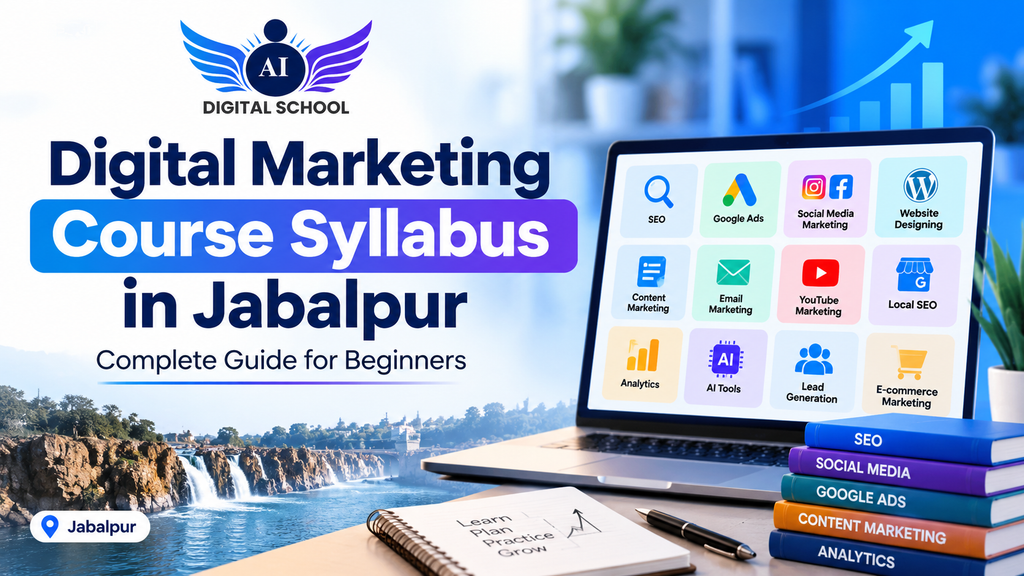
Digital Marketing Course Syllabus Jabalpur: Important Modules
1. Digital Marketing Fundamentals
The first module introduces the basic concepts of online marketing. Beginners learn how businesses use digital channels to reach their target audience and communicate their value.
Topics may include:
- Introduction to digital marketing
- Traditional marketing versus digital marketing
- Understanding target audiences
- Customer journeys and marketing funnels
- Organic marketing versus paid advertising
- Brand positioning and online presence
- Marketing objectives and key performance indicators
Practical learning: Develop a simple digital marketing plan for a local business, such as a restaurant, clothing store, coaching institute, or salon.
2. Search Engine Optimization (SEO)
SEO helps websites improve their visibility in organic search results. It is an important skill for marketers who want to attract relevant visitors without paying for every click.
A useful SEO module should cover:
- Keyword research and search intent
- On-page SEO
- Title tags and meta descriptions
- Heading structure and URL optimisation
- Internal linking
- Technical SEO fundamentals
- Off-page SEO and link-building principles
- Local SEO
- Google Search Console
- SEO performance measurement
Practical learning: Optimise a website page or blog post around a relevant keyword, create an SEO-friendly title, write a meta description, and review the page for improvements.
For example, a learner could practise creating useful content for a search query such as “digital marketing course in Jabalpur.”
3. Social Media Marketing (SMM)
Social media marketing helps businesses connect with audiences, publish useful content, build brand awareness, and generate enquiries.
This module may cover:
- Social media strategy
- Facebook and Instagram marketing
- LinkedIn marketing fundamentals
- Content calendars
- Reels and short-form video planning
- Caption writing and creative planning
- Audience engagement
- Social media insights and reporting
- Community management
Practical learning: Create a seven-day content calendar for a local business, including educational posts, product highlights, short videos, and enquiry-focused content.
Learners should understand that social media marketing requires more than posting regularly. Content should serve a clear purpose and address the needs of the intended audience.
4. Google Ads and Pay-Per-Click Advertising
Paid advertising allows businesses to reach relevant audiences through advertising platforms. Google Ads is especially useful for understanding how search-based campaigns work.
Topics may include:
- Introduction to PPC advertising
- Campaign objectives
- Keyword planning
- Campaign and ad group structure
- Search ad copywriting
- Bidding and budgeting basics
- Audience and location targeting
- Landing page relevance
- Conversion tracking
- Campaign performance analysis
Practical learning: Plan a sample Google Ads campaign for a local service. Define the target audience, keywords, advertising message, proposed budget, and landing page.
Beginners should learn campaign planning and measurement before investing real money in advertising.
5. Website Designing and WordPress
A website gives businesses a central place to present their products, services, information, and contact details. Website knowledge is valuable for digital marketers because campaigns often direct visitors to a website or landing page.
A website designing module may include:
- Website structure and navigation
- Domain names and hosting fundamentals
- WordPress basics
- Themes and plugins
- Website page creation
- Responsive design
- Landing pages
- Contact forms and calls to action
- Basic website security and maintenance
- Website SEO fundamentals
Practical learning: Build a basic website for a sample business with a homepage, services page, about page, blog, and contact page.
6. Content Marketing and Blogging
Content marketing focuses on creating helpful and relevant information for a target audience. Blogs, videos, infographics, guides, and social media posts can all support a content strategy.
Important topics include:
- Content strategy
- Audience and topic research
- Keyword-based blog planning
- Blog structure and headings
- Copywriting fundamentals
- Storytelling and brand voice
- Content optimisation
- Content repurposing
- Editorial calendars
Practical learning: Write a beginner-friendly blog post, optimise it for a relevant search query, and repurpose the key points into social media posts.
Good content should answer genuine questions and provide value instead of repeating keywords unnecessarily.
7. Email Marketing
Email marketing helps businesses communicate with subscribers and potential customers. It can be used for newsletters, educational content, promotions, and customer follow-ups.
Topics may include:
- Email marketing fundamentals
- Subscriber list management
- Newsletter planning
- Subject line and email copywriting
- Audience segmentation
- Campaign scheduling
- Consent and unsubscribe practices
- Open, click, and conversion metrics
Practical learning: Design a sample newsletter for a business or educational institute and identify the action you want readers to take.
8. YouTube and Video Marketing
Video is an important format for educating audiences, demonstrating products, and explaining services. YouTube marketing introduces learners to the planning and optimisation of video content.
Topics may include:
- YouTube channel setup
- Video topic research
- Titles and descriptions
- Thumbnail planning
- Video SEO fundamentals
- Shorts content planning
- Audience retention concepts
- Channel analytics
Practical learning: Plan a short educational video with a clear hook, useful information, a relevant title, and a call to action.
9. Local SEO and Google Business Profile
Local SEO helps businesses become more discoverable when people search for nearby services. It is particularly relevant to local businesses in Jabalpur.
Topics may include:
- Local keyword research
- Google Business Profile fundamentals
- Business information accuracy
- Categories and service descriptions
- Reviews and customer communication
- Local landing pages
- Business directory listings
- Local search performance
Practical learning: Prepare a local SEO checklist for a Jabalpur business and identify improvements to its website and business profile.
10. Lead Generation and E-commerce Marketing
Lead generation focuses on attracting potential customers and encouraging them to make an enquiry. E-commerce marketing focuses on promoting products and improving the online shopping experience.
Topics may include:
- Lead generation strategies
- Landing page planning
- Calls to action
- Enquiry forms
- Lead magnets
- Customer follow-up
- E-commerce product pages
- Product promotion campaigns
- Conversion optimisation fundamentals
Practical learning: Create a landing page outline for a course, service, or product and identify how visitors can submit an enquiry.
11. Analytics and Performance Reporting
Digital marketers need to understand whether their work is helping achieve business objectives. Analytics provides information about website traffic, engagement, and conversions.
A syllabus may introduce:
- Google Analytics fundamentals
- Google Search Console
- Website traffic sources
- Click-through rates
- Engagement metrics
- Conversion tracking concepts
- Campaign reporting
- Performance improvement
Practical learning: Prepare a simple monthly report template showing the activities completed, available performance data, key findings, and recommended next steps.
12. AI Tools and Marketing Automation
AI tools can support digital marketing tasks such as research, brainstorming, content planning, creative development, and repetitive workflows.
Topics may include:
- AI-assisted keyword and topic research
- Content idea generation
- Blog outlines and caption drafts
- Video script planning
- AI creative tools
- Marketing workflow automation
- Chatbot and customer-response concepts
- Fact-checking and responsible AI use
Practical learning: Use an AI tool to develop content ideas for a local business, review the suggestions, and turn the strongest idea into a social media post or video script.
AI should support human judgement, not replace fact-checking, originality, or an understanding of the audience.
How Long Does a Digital Marketing Course Take?
Course duration depends on the curriculum, learning format, and level of training. AI Digital School’s website describes digital marketing training programmes with different duration options.
Before enrolling, ask for the current course schedule, total learning hours, module sequence, practical assignments, and opportunities to receive feedback.
A useful course should provide enough time to practise key concepts rather than covering every topic only at a surface level.
Who Can Join a Digital Marketing Course?
Digital marketing can be explored by people from different educational and professional backgrounds.
It may be suitable for:
- Students and fresh graduates
- Job seekers
- Working professionals
- Entrepreneurs and small business owners
- Freelancers
- Content creators
- People looking to develop online marketing skills
You do not need to master every marketing tool before beginning. Start with the fundamentals and gradually build practical experience.
Why Explore AI Digital School in Jabalpur?
AI Digital School offers digital marketing education in Jabalpur, with course modules covering areas such as SEO, social media marketing, PPC advertising, website designing, blogging, email marketing, YouTube marketing, analytics, and other online marketing topics.
When comparing courses, look at the complete syllabus, trainer guidance, practical work, class format, and support available to learners. Ask whether you will work on projects and receive feedback on your assignments.
You should also confirm current fees, duration, certification details, and any placement assistance directly with the institute before making an enrolment decision.
Visit the official website to explore available programmes: https://aidigitalschool.in/
Frequently Asked Questions
1. What is included in a digital marketing course syllabus in Jabalpur?
A digital marketing syllabus commonly covers SEO, social media marketing, Google Ads, content marketing, website designing, email marketing, analytics, lead generation, and AI tools. Modules vary by institute and course level.
2. Can beginners join a digital marketing course?
Yes. Many digital marketing programmes introduce the fundamentals before moving to specialised topics. Beginners should choose a course that includes clear explanations and practical exercises.
3. Does a digital marketing course include SEO?
SEO is a common digital marketing module. It may cover keyword research, on-page SEO, technical SEO, link-building principles, local SEO, and search performance measurement.
4. Is website designing part of digital marketing training?
Some programmes include website designing, often using WordPress, along with landing pages and website SEO. Check the institute’s syllabus to confirm the level of website training provided.
5. Does the course teach AI tools?
AI Digital School lists AI tools among its digital marketing learning areas. Ask the institute for the current AI module details and the tools included in your selected programme.
6. How do I choose the right digital marketing course in Jabalpur?
Compare the syllabus, practical assignments, trainer support, class schedule, fees, and project opportunities. Choose a programme that matches your current skills and learning goals.
Conclusion
Understanding the digital marketing course syllabus in Jabalpur can help you choose a programme that develops relevant marketing skills step by step. From SEO and social media to paid advertising, website designing, analytics, and AI tools, each module contributes to a broader understanding of online marketing.
The best starting point is to review the curriculum carefully, practise what you learn, and build a portfolio of projects that demonstrates your abilities.
If you want to explore digital marketing training in Jabalpur, visit AI Digital School to review the available programmes and request more information about the current syllabus.
Ready to begin your digital marketing journey? Explore AI Digital School and take the next step towards developing practical digital marketing skills.